
Designing Preschool Programs That Grow with Children and Families
If you’ve started researching preschools, you’ve probably come across a list of terms: play-based, child-centered, emergent curriculum. They sound appealing, but what do they actually mean for your child’s daily experience?
The reality is that early childhood education has changed significantly over the past 10 or 20 years. Today’s preschool programs focus not just on academic readiness but also on nurturing the whole child—fostering curiosity, creativity, confidence, and social-emotional growth. And this change isn’t just a passing trend; it is backed by decades of research and endorsed by leading child development experts. (Check out recent pieces from The Hechinger Report and UNICEF for great examples.)
At the Purchase Children’s Center, we shape our program around what young children—and their families—need most: safety, connection, flexibility, and joy.
Today’s families manage busy schedules, irregular work hours, and a desire for strong communication between school and home. That’s why we offer a variety of program hours and increased transparency through our digital platform. “Parents want to feel informed and connected,” says Preschool Director Jessica Wang. “Our goal is to partner with them—sharing updates, celebrating milestones, and making sure they always know how their child is growing.”
Since our founding in 1980, the PCC has believed that the key to a quality preschool experience is the relationship built between child, parent, and teacher. We imagine an early education environment that empowers children to become:
• Confident learners
• Compassionate friends
• Engaged citizens in a rapidly changing world
“We’re intentional about designing programs where every child feels seen, supported, and challenged,” Jessica explains. “From how classrooms are arranged to how we transition between activities—every detail helps build a sense of security and community.”
Yes, safety includes locked doors, background checks, and emergency procedures. But it also means emotional safety. Children learn best when they trust the adults around them. Our staff model empathy, patience, and respect. Low ratios, consistent routines, and carefully arranged environments allow children to explore confidently. Because we prioritize safety and community, our curriculum is free to be play-based and developmentally appropriate—the approach that research shows supports long-term school success.
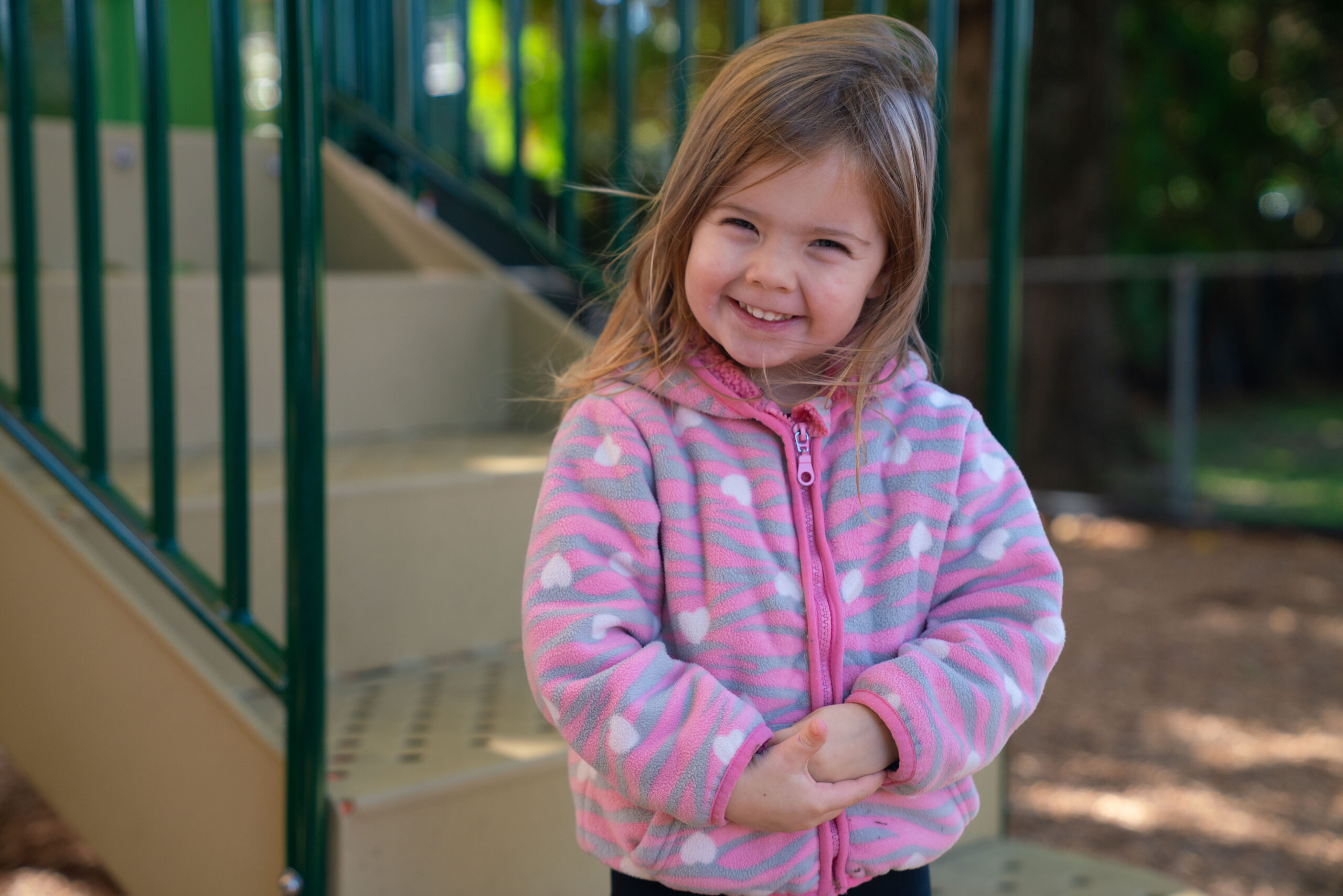
In short, that means our students learn by doing, which helps them develop the foundational skills they’ll need for kindergarten and beyond. Jessica explains it simply: “Elementary teachers tell us that students are most available for learning when they can follow routines, self-regulate, and communicate their needs. Those are the skills we intentionally nurture here every day.”
Supporting teachers is central to effective early childhood leadership. “Our staff meets regularly to share observations, reflect on what’s working, and brainstorm new strategies,” says Jessica. “Professional development isn’t a checkbox—it’s how we stay inspired. When teachers feel supported and valued, that energy shines through to the children.” At Purchase Children’s Center, our teachers are at the heart of early learning. They create environments where curiosity sparks, friendships grow, and small steps lead to significant developmental leaps.
We asked them to share real stories that illustrate these ideas—stories that show what “play-based” learning looks like in action and how it helps children prepare for the challenges of kindergarten and the real world.
Real Stories from PCC Classrooms
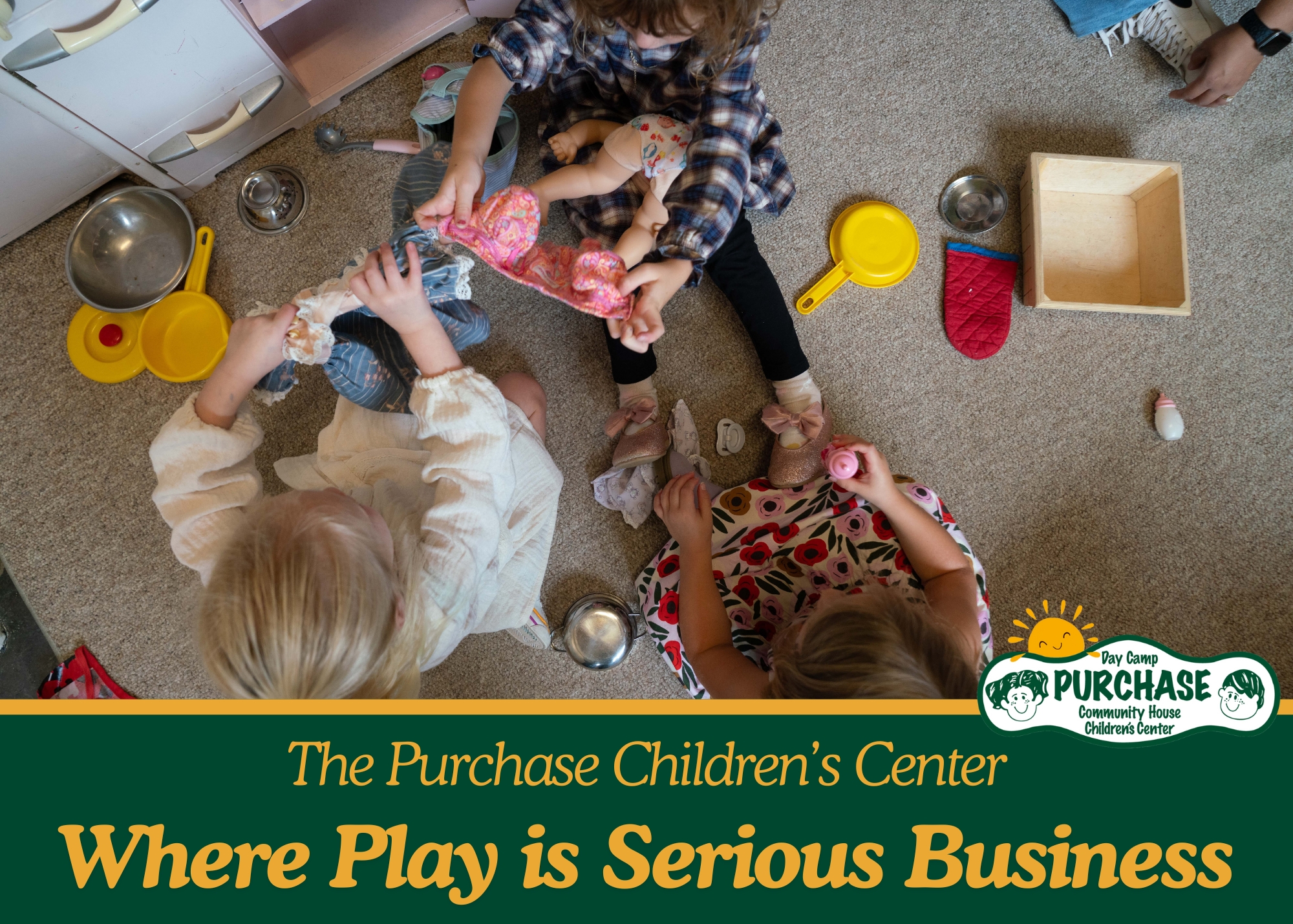
Play is the most natural and effective way for young children to learn. Every block tower, dramatic-play scenario, or outdoor exploration enhances problem-solving, cooperation, language, motor skills, and creativity. Our teachers observe this evolution daily, so we asked them to share some of their favorite examples from the classroom.
Starting with our youngest learners, in our two-year-old classroom, graduate student and assistant teacher Jennifer Franco often plans to take learning outdoors. She notes that play allows children to “explore, experiment, and make sense of their world.” During nature walks, children collect colorful leaves and later incorporate them into art projects, linking their observations to hands-on learning. These experiences keep children curious, energized, and engaged.
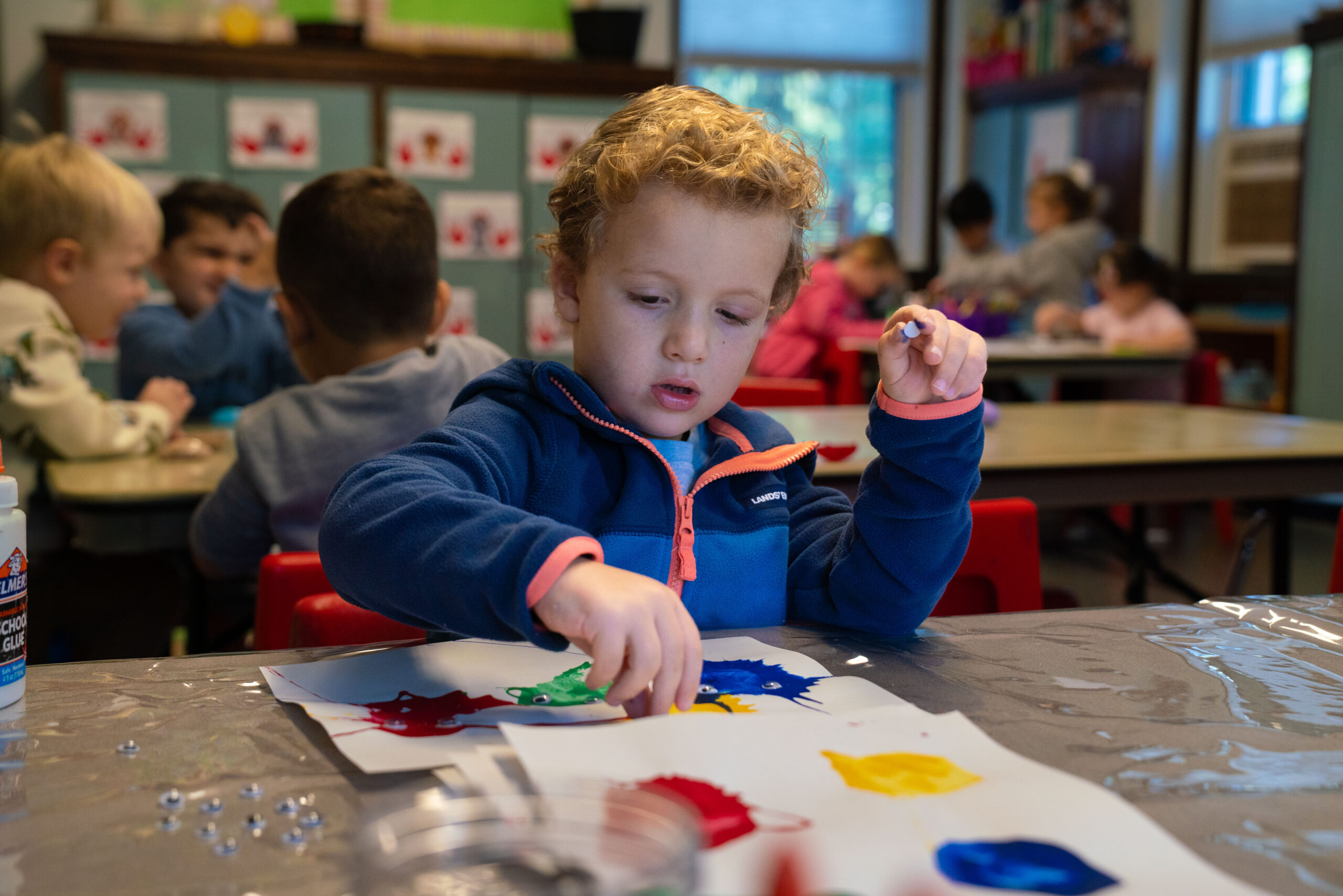
Moving into our preschool classrooms, Amanda Dennis, a lead teacher since 2021, explains that she develops her curriculum around children’s interests. When her class became fascinated with pizza, she transformed the dramatic play area into a full “pizza parlor.” Children took orders, created menus, designed currency, and worked together to serve customers. Through this playful experience, they practiced communication, sequencing, fine-motor skills, and teamwork—skills naturally integrated into meaningful play.
With over a decade at PCC, Jackie Bacon emphasizes integrating play into every unit. During Fire Safety Week, she uses hands-on materials like toy fire extinguishers of various sizes to help children sort and compare objects, introducing early math concepts. She also assists students in distinguishing safe from unsafe or hot items with visuals and classification boards. A favorite culminating activity is a building-wide scavenger hunt. Students, with clipboards in hand, search for real safety equipment, reinforcing new vocabulary and concepts through genuine exploration.
Moments of Growth That Stay with Us
Our teachers witness remarkable developmental leaps, moments that stay with them long after the school year ends.
Amanda recalls a child who spent an entire year in preschool without speaking. When she returned the following fall, the child confidently raised her hand to participate, “without any prompting or encouragement.” It was a breakthrough that spoke volumes about trust, readiness, and emotional growth.
Lead teacher Elizabeth Magnotta reflected on a student who started the year unable to recognize her name or any letters. Through consistent practice, games, and foundational literacy activities, the child made remarkable progress. By the end of her four-year-old year, she could write her name and identify all letters and their sounds—a growth Elizabeth described as “truly amazing.”
These stories remind us that early learning is about much more than just mastering letters or numbers. It’s about building confidence, resilience, joy, and connection. At the Purchase Children’s Center, we are proud to support these meaningful steps—for children, families, and teachers alike.
Schedule a tour, meet our educators, and experience our community by visiting our website today.
This article and photos were submitted and sponsored by Purchase Children’s Center.
We’re incredibly grateful for our amazing community and the wonderful people and places that make it so special. Explore our Blog page for features that spotlight local businesses and more. Looking for something to do in Westchester? Check out our Local Guides and Calendar pages to discover what’s happening locally and follow along on Instagram for more!